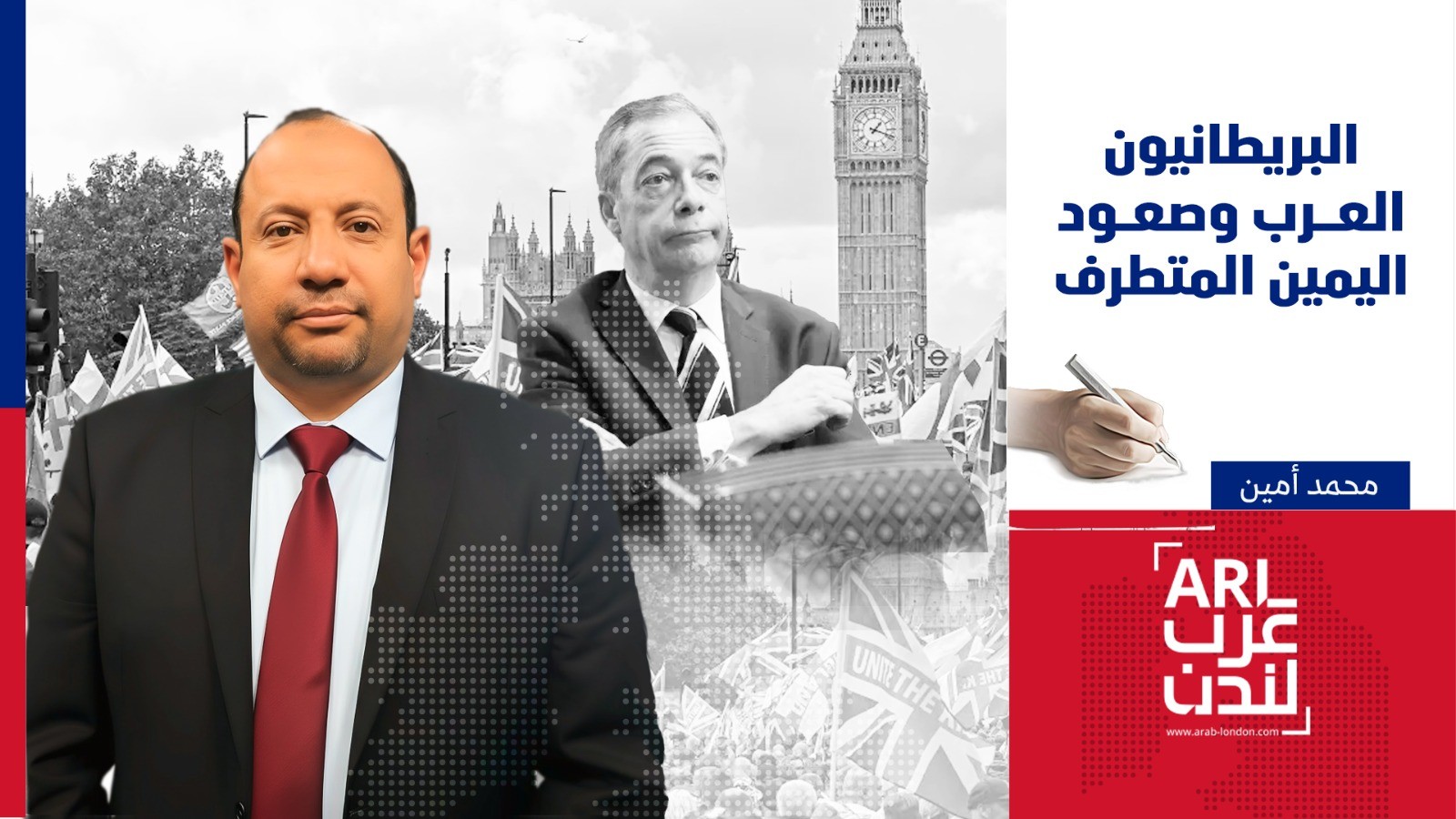
Muhammad Amin
Palestinian-British writer
Editor-in-chief of “Arab London Platform”
The phenomenon of far-right politics and populist rhetoric in Britain has shifted from a marginal state, confined to individuals on the fringes of political life, into a dangerous and visible trend. It is now represented by political parties that opinion polls suggest could win if elections were held today. It is no longer expressed only through populist speeches by obscure or isolated politicians, but these actors are increasingly moving closer to Parliament and, consequently, to the formation of the next government.
The far right, which through its rhetoric targets minorities and migrants, has a clear problem with cultural and religious pluralism. This pluralism is a core pillar of British society, of which we are part as an Arab and Muslim community in the UK. Britain is home to multiple minorities, communities, cultures, colours, religions, and ethnicities. Far-right leaders consistently attack migrants and refugees and blame them for economic, social, and political failures.
In the British context, the far right is represented by the Reform Party, led by the populist right-wing figure Nigel Farage, the architect of Brexit. Populist right-wing movements view immigration and multiculturalism as a burden rather than an asset. They define citizenship through skin colour and names that sound “British,” treating those of different origins as suspect until proven otherwise. Despite the presence of some minority members within its ranks, these are often seen as token figures who adopt the party’s rhetoric while serving to deflect accusations of racism.
“Far-right politics has a clear problem with cultural and religious pluralism, which is a cornerstone of British society of which we are part as an Arab and Muslim community.”
The participation of around 110,000 people in a march in central London in mid-September, organised by the far-right anti-immigration activist Tommy Robinson, is a source of concern for minorities in general, and Arabs and Muslims in particular. It was one of the largest far-right demonstrations in modern UK history. It carried slogans not only against migrants, but also against Islam, Arabs, and the Palestinian cause.
These transformations in British society and political life require serious reflection from British Arabs and other minorities. They require research, clear frameworks, and detailed plans to address this phenomenon. This is precisely what a number of experts, academics, and journalists discussed in an open dialogue organised by “Arab London Platform” and the Arab Community Conference in the UK last week. The discussion reflected early awareness of this trend, as well as confidence among British Arabs in their ability to respond to it.
The discussions reflected a strong political awareness of the scale of the issue. They confirmed a shift among Arabs from seeing themselves as guests in the country to viewing themselves as full citizens. Any targeting of them or any minority through populist rhetoric was seen as unacceptable. The younger generation of British Arabs has moved beyond the mindset of temporary presence and now acts as full citizens rather than guests. They see Britain as their home and the future of their children, integrated without losing their cultural, religious, and identity roots. They are citizens, not residents, committed to staying rather than leaving.
Unlike the first generation of migrants and refugees, the new generation of British Arabs sees Britain as their country. They buy homes, marry, plan for retirement, and hope for improvements in healthcare services. They participate in elections as voters and candidates, and many are active in political parties. Although their entry into political life came late, as the saying goes, better late than never.
British Arabs are concerned about the rise of the far right, but they are not terrified by it. Like other citizens, they are worried about the future of their country, which in this case is Britain. Recent opinion polls give the Reform Party, led by Nigel Farage, a projected majority of around 375 seats. According to Ipsos polling in September, the party ranked first with 34 percent, compared to 22 percent for Labour and 14 percent for the Conservatives. A more recent YouGov poll suggests Reform could win around 311 parliamentary seats.
In addition to these alarming projections, the organisation Tell MAMA, which monitors anti-Muslim hate crimes in the UK, reported that at least 22 mosques across the country were attacked or targeted in hate incidents over the past three months since June 2025. It described this as one of the highest levels of mosque targeting since its work began in 2011.
Parents express concern about their children facing verbal or physical racism, as well as discrimination in employment opportunities. The key question raised in the discussion was “What is to be done?” The dialogue produced several recommendations: rejecting fear and confronting the phenomenon with the conviction that Arabs are full citizens; moving from concern to action through increased political participation; building a counter-media discourse grounded in facts and human stories; launching awareness programmes in mosques and schools to reinforce citizenship without erasing cultural identity; documenting attacks for legal and human rights action; empowering youth politically and encouraging engagement in political parties; building alliances; strengthening integration while maintaining identity; increasing media presence of British Arabs; engaging in dialogue with all segments of British society, including representatives of right-wing movements; and avoiding exaggeration of the threat or the spread of fear.